
Saint Marguerite Bourgeoys: Educator of the World
Saint Marguerite Bourgeoys (1620–1700), known as the “Mother of the Colony” in New France and Canada’s first female saint (canonized 1982), was a pioneering educator and foundress.
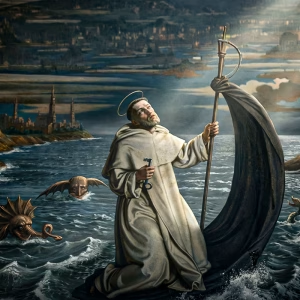
Born in Troyes, France, she experienced a profound conversion at age 20, leading her to join a non-cloistered group dedicated to charity and teaching. In 1653, she sailed to Ville-Marie (Montreal) at the invitation of its governor, opening Canada’s first school in a stable in 1658. She founded the Congregation of Notre-Dame, an uncloistered community of women focused on active apostolate—teaching girls, the poor, Indigenous children, and practical skills—while living in poverty and traveling to remote areas.
She welcomed and mentored the “filles du roi” (young women sent to marry settlers), established missions, and made three arduous trips to France for recruits and approvals. Despite opposition (including attempts to cloister her sisters), she persevered, modeling imitation of Mary’s active life.
Leadership Lessons for Catholic Leaders
Embrace innovative, uncloistered ministry to meet real needs; prioritize holistic education integrating faith, practical skills, and outreach to the marginalized; persevere amid hardship and opposition with trust in Providence; foster family and community stability through evangelization and service.
Innovate in evangelization and education. She pioneered uncloistered religious life for women, founding the Congregation of Notre-Dame to teach freely in the world, imitating Mary’s active charity—challenging 17th-century norms and inspiring modern lay apostolates.
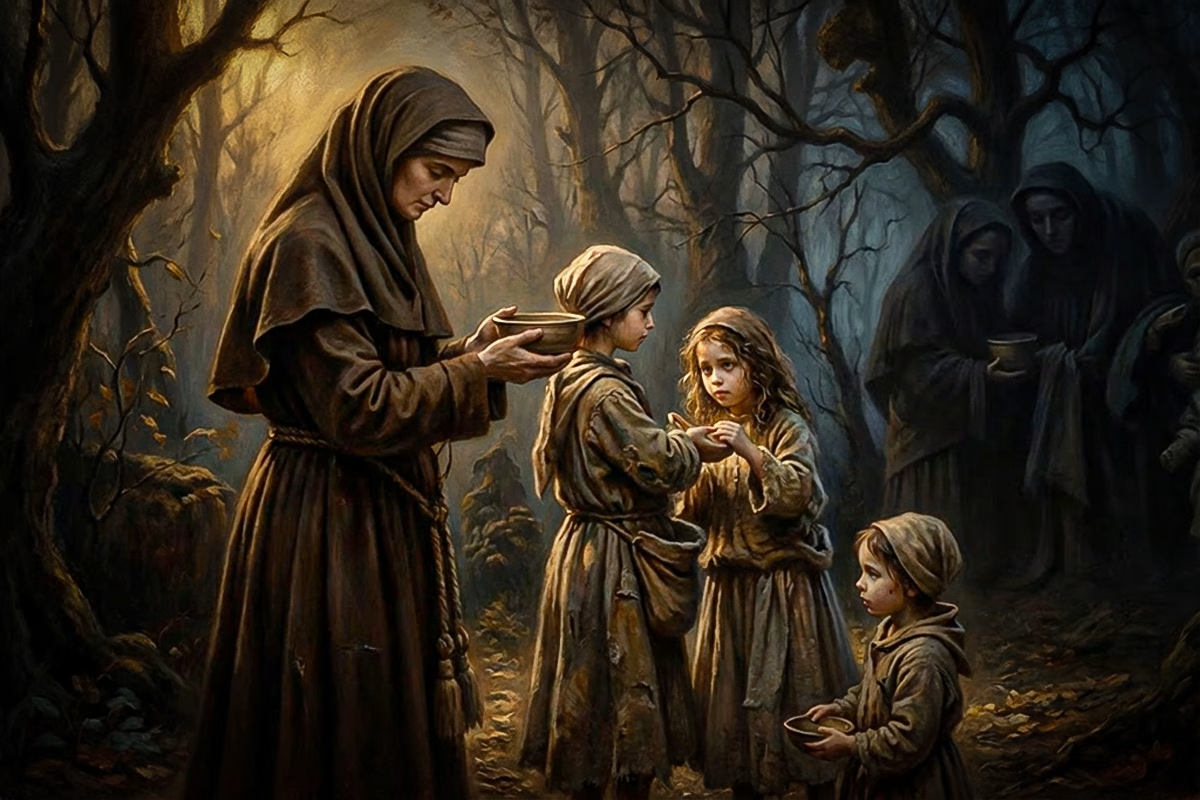
Serve the marginalized with courage. In harsh New France, she educated poor girls, Indigenous children, and settlers’ daughters in faith and practical skills, welcoming “filles du roi” and enduring dangers, showing outreach beyond comfort zones.
Persevere through opposition. Facing ecclesiastical resistance to her non-cloistered vision, she made arduous voyages and diplomatically secured approvals, teaching resilient trust in God’s timing.
Foster holistic formation. Her schools integrated religious instruction with vocational training and family preparation, modeling parish programs that build strong Christian homes and communities.
Her visionary spirit—praised by St. John Paul II as ahead of its time—urges today’s leaders to adapt boldly for quality Catholic education and support amid secular challenges.