
Paul Miki and Companions: Forgiveness from the Cross
Saints Paul Miki and Companions, Japanese Martyrs, are commemorated on February 6 in the Roman Catholic Church—following St. Agatha (Feb 5) in this early February sequence of courageous witnesses.
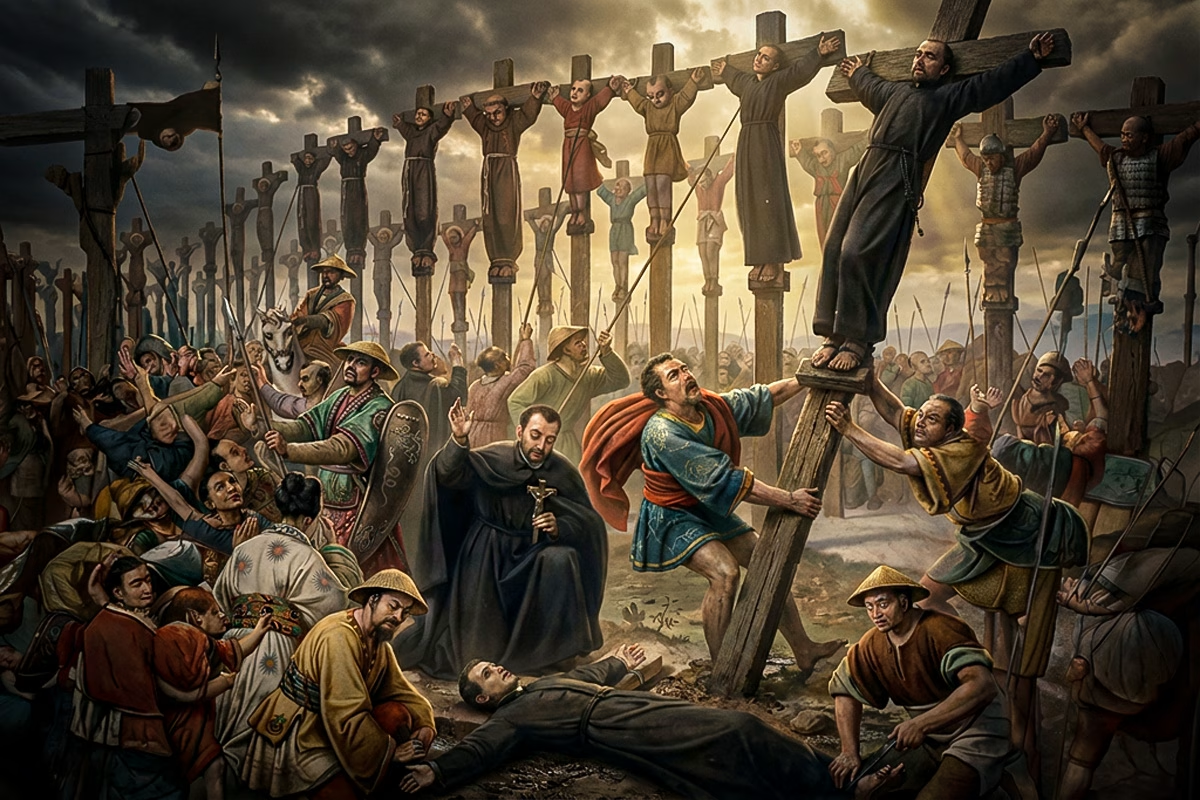
Paul Miki (c. 1562–1597) was a Japanese Jesuit seminarian born into a noble samurai family near Kyoto. Baptized at age 5, he entered the Jesuits in 1580 and became a brilliant preacher and catechist. In 1597, amid rising anti-Christian persecution under Toyotomi Hideyoshi, he and 25 companions (including 6 Franciscan friars, 3 Jesuits, and 17 lay catechists—3 of them young boys) were arrested in Kyoto. They were forced to march 600 miles to Nagasaki, enduring public humiliation and mutilation (their left ears were cut off).
On February 5, 1597, the group of 26 was crucified on a hill overlooking Nagasaki. Paul Miki, tied to his cross, delivered a final sermon of forgiveness: “I am Japanese and a Jesuit… I have committed no crime… I forgive all who have caused my death… I ask God to pardon them.” All were lanced through the heart and died proclaiming “Jesus! Mary!” Their martyrdom was one of the most public and documented in Church history.
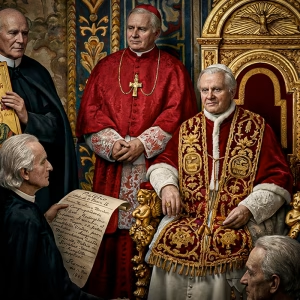
Canonized by Pope Pius IX in 1862, they are the protomartyrs of Japan. Paul Miki is patron of Japan, Jesuits in Japan, and catechists.
Leadership Lessons for Catholic Leaders
Uncompromising fidelity amid persecution: Facing death, they refused to renounce Christ—leaders must hold fast to faith even under cultural or political pressure.
Evangelical courage and eloquence: Paul’s final sermon from the cross shows the power of preaching forgiveness and truth in the face of hatred.
Unity across vocations: Priests, religious, and laity (including children) died together—leaders should foster inclusive, collaborative communities.
Forgiveness as witness: Their mercy toward persecutors models Christlike love, essential for healing divisions within the Church and society.
Reflection Questions & Personal Application
In an age of secular hostility and internal challenges, these martyrs inspire leaders to proclaim Christ boldly, forgive generously, and witness with joy—even to the point of sacrifice.