

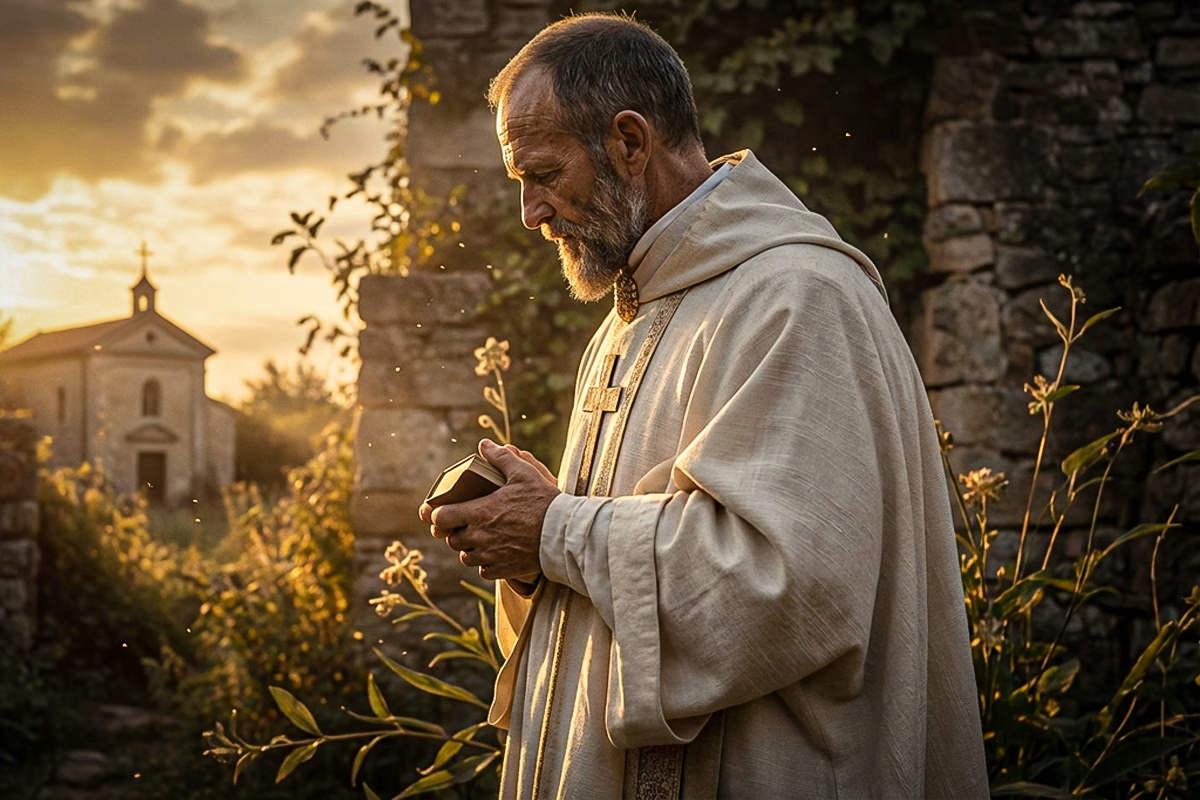
Saint Rembert: Faithful Successor in Mission
Saint Rembert (also Rimbert or Rembert of Hamburg-Bremen), archbishop and confessor, is commemorated on February 4 in the Roman Catholic calendar—fittingly following St. Blaise (Feb 3) in this early February lineup of missionary and pastoral saints.
Born around 830 near Bruges in Flanders (modern Belgium), Rembert entered the monastery of Turholt as a young man. He became a close companion and disciple of St. Ansgar, the “Apostle of the North,” accompanying him on arduous missionary journeys to evangelize pagan Scandinavia (Denmark, Sweden, and parts of Norway). After Ansgar’s death in 865, Rembert was unanimously elected as his successor as Archbishop of Hamburg-Bremen, overseeing vast northern territories including Scandinavia and Slavic regions.
Rembert continued Ansgar’s work amid Viking raids and pagan resistance: he evangelized tirelessly, ransomed Christian captives, founded churches, and even led a Frisian army in 884 to repel Viking invaders at the Battle of Norditi, protecting his flock. He authored the Vita Ansgarii, a seminal biography of his mentor that remains a key historical source on early Nordic Christianity. He died on June 11, 888, in Bremen, but his feast is February 4 in many traditions.
Leadership Lessons for Catholic Leaders
Faithful succession and continuity: Stepping into Ansgar’s shadow without seeking glory, he preserved and expanded the mission—leaders must build on predecessors’ legacies humbly.
Courage in adversity: Facing hostile pagans and physical threats, he combined spiritual zeal with practical defense, teaching resilience and protective shepherding in turbulent times.
Missionary zeal and ransoming the captive: His ransoming of slaves echoes Christ’s redemption—leaders should prioritize evangelization of the marginalized and advocacy for the oppressed.
Scholarly witness: Writing Ansgar’s life shows the value of documenting faith journeys to inspire future generations.
Reflection Questions & Personal Application
In an age of secular challenges and Church decline in parts of the West, Rembert urges leaders to persevere boldly in outreach, defend the vulnerable, and hand on the faith intact—proving that true authority flows from sacrificial service, not power.