

The Chair of Saint Peter: Authority in Service
The Chair of St. Peter (Latin: Cathedra Petri) refers to both a physical relic and a profound spiritual symbol in the Catholic Church.
Leadership Lessons for Catholic Leaders
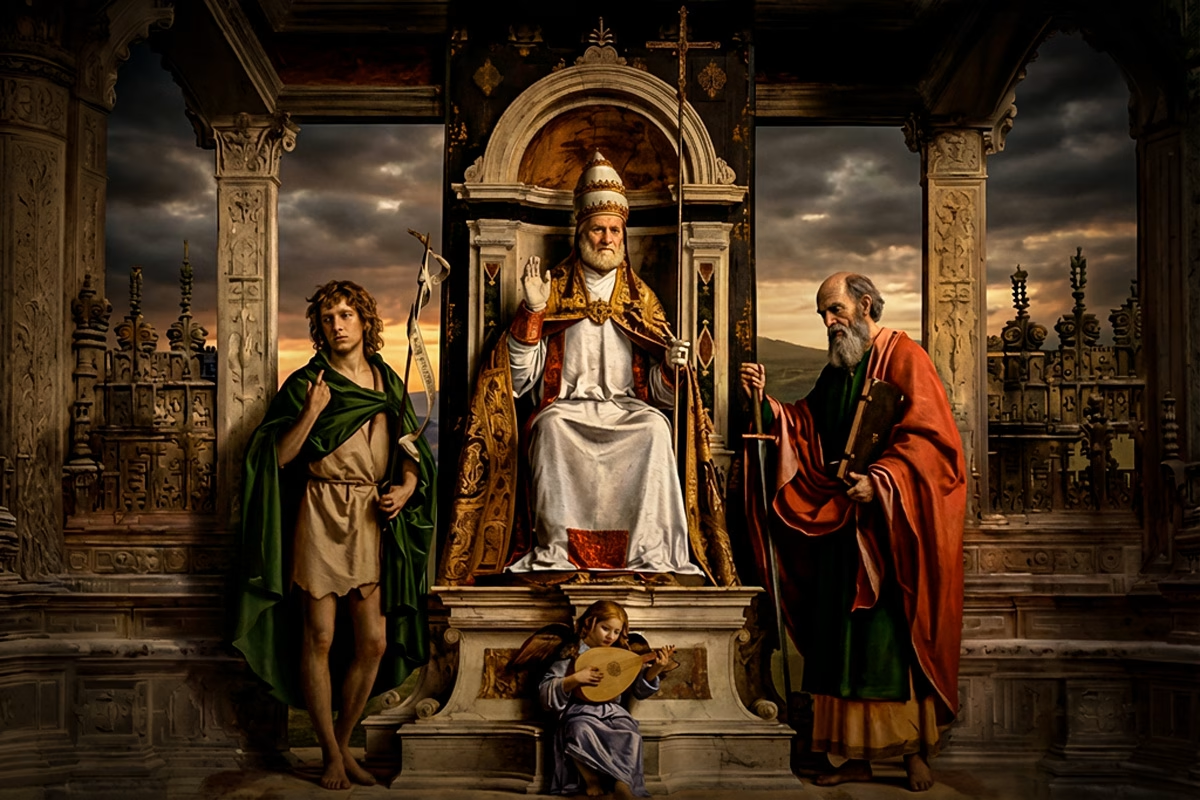
Physically, it is an ancient wooden throne, traditionally believed to have been used by the Apostle Saint Peter as Bishop of Rome. Encased in a magnificent gilt-bronze monument designed by Gian Lorenzo Bernini (1647–1653), it stands in the apse of St. Peter’s Basilica in Vatican City. This Baroque masterpiece depicts Christ entrusting Peter with leadership (“Feed my sheep”), the giving of the keys, and the washing of feet—emphasizing service, authority, and teaching. Supported by figures of Church Doctors and crowned by a dove representing the Holy Spirit, it symbolizes the guidance of the Church through Peter’s successors.
Spiritually, the “Chair” signifies the episcopal office and primacy Christ conferred on Peter: “You are Peter, and on this rock I will build my church” (Matthew 16:18–19). It represents the Pope’s role as supreme pastor, teacher (magisterium), and visible head uniting the faithful in faith and charity. The term “ex cathedra” (from the chair) denotes infallible papal teaching on faith and morals.
Reflection Questions & Personal Application
The Church celebrates the Feast of the Chair of Saint Peter, Apostle on February 22, a tradition dating back over 1,600 years, honoring Peter’s authority passed to the Popes as successors. It underscores Church unity, the safeguarding of doctrine, and the Petrine ministry’s service to Christ’s flock.