

Divine Mercy Sunday: Trust That Restores
Divine Mercy Sunday is a special feast in the Catholic Church celebrated on the Second Sunday of Easter, the last day of the Easter Octave. In 2026, this falls on April 12.
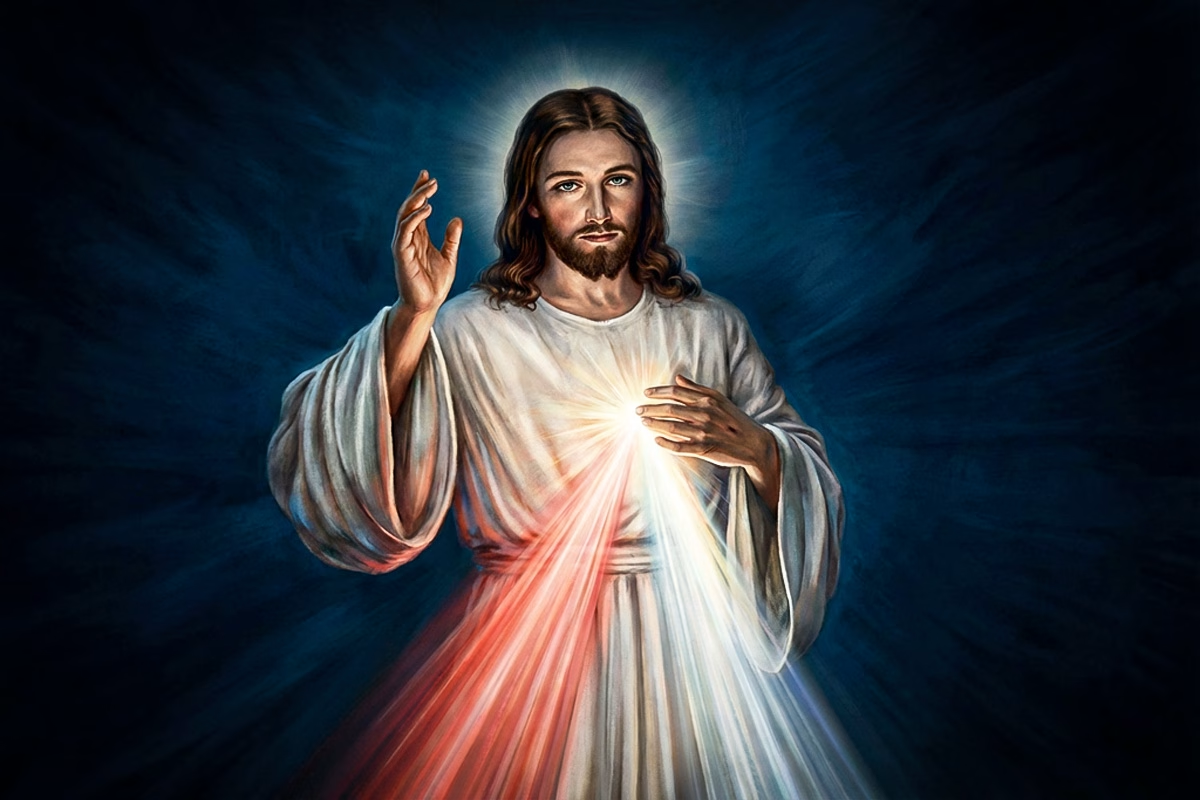
This feast highlights God’s infinite mercy, revealed through Jesus’ Passion, Death, and Resurrection. It stems from private revelations to St. Faustina Kowalska (1905–1938), a Polish nun and now saint. In the 1930s, Jesus appeared to her, requesting a feast dedicated to Divine Mercy on this Sunday, promising extraordinary graces: complete forgiveness of sins and temporal punishment for those who approach with trust, receive Holy Communion, go to Confession (within about 20 days), venerate the Divine Mercy Image, and pray for sinners (often via the Chaplet).
Pope St. John Paul II canonized St. Faustina on April 30, 2000, and officially named the Second Sunday of Easter Divine Mercy Sunday for the universal Church, calling it a “refuge and shelter for all souls, especially poor sinners.” He described it as an “Easter gift” to humanity, emphasizing mercy as central to the Paschal Mystery.
Leadership Lessons for Catholic Leaders
- Praying the Chaplet of Divine Mercy at 3 p.m. (the Hour of Mercy).
- Venerating the Divine Mercy Image (Jesus with rays of red and pale emanating from His heart).
- Participating in Confession, Eucharist, and adoration.
- Reciting the Divine Mercy Novena (starting Good Friday).
Reflection Questions & Personal Application
This day invites deep trust in Jesus’ mercy (“Jesus, I trust in You”) and renewal of faith amid trials.