
Dear Brothers and Sisters in Christ,
As the Church rejoices in the light of the Resurrection during this Easter Season, the Paschal Mystery, the Passion, Death, and Resurrection of Jesus Christ, shines with fresh clarity and power. To a bishop leading a diocese in pastoral planning, this holy mystery represents much more than just a doctrine to explain. This phrase encourages a mindset worth embracing, offering deep optimism and motivating bold, spiritually guided leadership during times of transformation.
In the Passion, we see Jesus who refuses to cling to control. Even amid misunderstanding, opposition, and suffering, He empties himself completely, entrusting everything into the hands of the Father. This self-emptying is not defeat; it is the revelation of divine strength and freedom. For any bishop engaged in pastoral planning, the temptation to hold tightly to authority, to micromanage outcomes, or to protect familiar structures can be strong. Yet the Passion gently invites a unique way: the grace of relinquishment. It calls the bishop to trust that the Church’s mission belongs first to God, not to any one shepherd, and that the Holy Spirit is at work through the entire People of God.
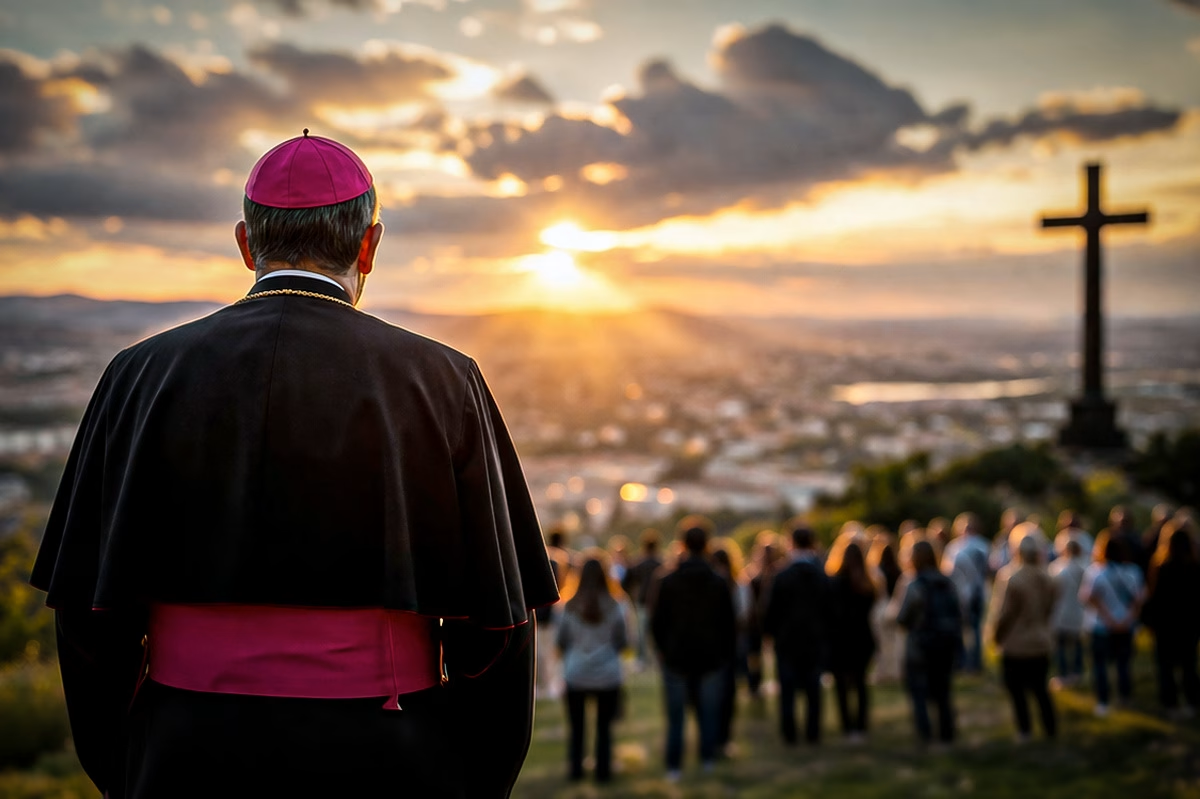
The Cross stands as a powerful symbol of redemptive love. In seasons of pastoral planning, there are often moments that feel like contraction or loss, parishes merging, resources shifting, long-standing structures changing. These can be painful and disorienting. The instinct may be to resist or retreat into centralized control. But the Cross reveals that God brings life precisely through such surrender. The bishop is invited to stand faithfully in these moments of apparent dying, holding the pain with hope rather than fear, confident that what seems like an ending is often the hidden beginning of new life.
This truth finds beautiful expression in the courage to delegate. By entrusting real responsibility and pastoral initiative to parish leaders, lay faithful, and local communities, a bishop mirrors how Jesus entrusted his mission to his disciples. Delegation is not a loss of authority; it is an act of resurrection faith. It recognizes that the Holy Spirit moves freely among all the baptized and delights in raising new gifts, new energies, and new forms of discipleship from the grassroots.
Delegation is not a loss of authority; it is an act of resurrection faith.
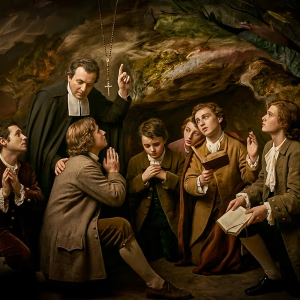
As a Permanent Deacon and, more personally, as the father of a priest, I was deeply moved by this story. It touched my heart and led me to think about the relationship between bishops and their priests. Our bishops are called to be fathers in this same spirit of humble mercy. At the Chrism Mass, when priests stand before their bishop to renew their vows and the holy oils are blessed, it is a moment of reaffirmation, for the priests, yes, but also an opportunity for bishops to reflect on their own fatherly and spiritual leadership.
We know that some priests walk heavy paths, burdened by doubt, weariness, isolation, or wounds that have caused them to falter. They remain priests forever, ontologically changed by the sacrament, but like all of us, they are beggars too, in need of a father’s encouragement, guidance, correction, and above all, merciful love.
At the heart of this leadership lies a deep interior conversion. The bishop must reflect on where his authority comes from, does it stem from exercising power or fostering community? In directing every detail, or in discerning and nurturing the gifts of others? The Death of Jesus strips away every illusion of self-sufficient power and grounds the bishop in joyful obedience to the Father. This leads to a style of leadership marked less by command and more by accompaniment, walking with the people, listening with an open heart, and fostering a shared mission born of the Resurrection.
And then comes Easter, the definitive victory! The Resurrection shows that any act of faith, no matter how small, is never in vain. That which passes through the Cross is not lost; rather, it becomes transformed into something more abundant and fruitful. In the context of diocesan pastoral planning, this is a message of radiant hope. Even amid necessary changes and periods of pruning, the Risen Christ is already at work, generating fresh expressions of faith, vibrant communities of discipleship, and surprising new life.
Easter inspires a sense of hope that should be shared openly and with confidence. A vision for the diocese cannot remain in documents or top-down directives alone. It must take shape through real-life relationships and in local contexts. That is why empowering those closest to the daily life of the faithful, the “lowest level” in the best sense, is so vital. When a bishop entrusts real decision-making and initiative to them, he affirms their baptismal dignity and releases the creative power of the Resurrection in their midst. They become not mere executors of a plan, but joyful co-creators in the Church’s future.
They become not mere executors of a plan, but joyful co-creators in the Church’s future.
Such leadership also calls for deep humility. The bishop must read the “signs of the times” with Easter eyes, recognizing that the Church’s life has always moved through seasons of growth, pruning, and new springtime. These are not signs of failure but part of God’s wise and loving providence. With humility, the bishop resists both false triumphalism and paralyzing despair, instead embracing a discerning heart that knows what must be let go so that the Gospel may bear even greater fruit.
Openness to the Holy Spirit is central. The Spirit who raised Jesus from the dead is the true architect of pastoral renewal. The bishop’s role is to listen attentively, in prayer, in consultation, and in loving presence among the people, so that the diocesan vision may align with the fresh breath of the Resurrection. This listening is active and expectant, full of patience and courage to follow wherever the Risen Lord may lead.
During Easter, the link between the Paschal Mystery and episcopal leadership is particularly clear. A bishop is expected to guide others in the same way that the Risen Christ does, by demonstrating selfless love, deep trust in God, joyful acceptance of the Spirit, and unwavering hope that sees beyond challenges to the assurance of new life. In delegating with confidence, embracing vulnerability, and guiding change with humility, the bishop participates in the very rhythm of death and resurrection.
This path is not without risk or challenge. It requires the ongoing willingness to let go of old ways of control so that something more beautiful and Spirit-led may emerge. Yet it is precisely the path of authentic fruitfulness. Just as the grain of wheat that falls to the ground and dies bears a rich harvest, so too do the structures and habits of the Church, when surrendered in faith, give way to a more vibrant, participatory, and missionary Church.
Diocesan pastoral planning at Easter goes beyond strategy or restructuring. It is about conversion, a joyful conversion that shapes the diocese ever more fully into the image of the mystery it celebrates: a Church marked by the Cross, radiant with the light of the Resurrection, and continually renewed by the life-giving breath of the Holy Spirit.
Alleluia! Through the resurrection of Christ, the Church experiences renewal.
Deacon Patrick Stokely
Saints Peter and Paul Parish
West Chester, PA