
Saint Patrick: Mission Beyond Fear
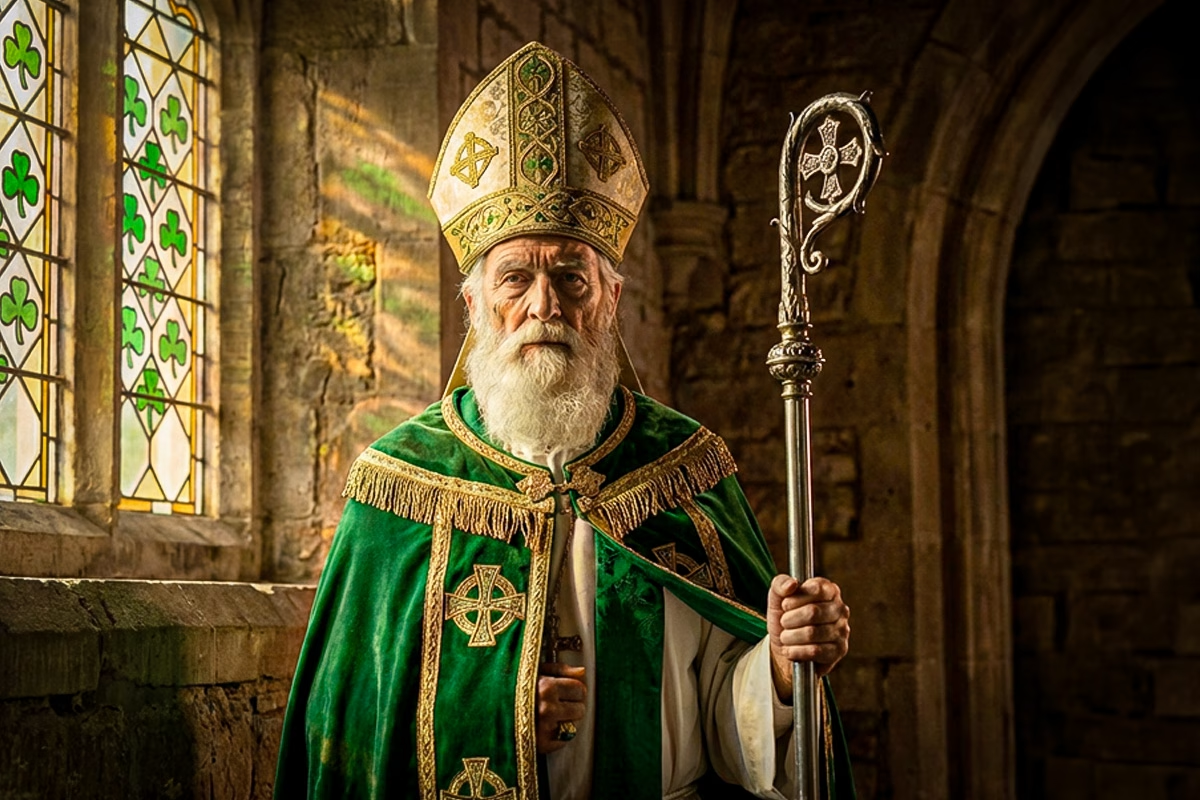
Patrick (Latin: Patricius; Irish: Pádraig), the “Apostle of Ireland,” was a 5th-century Romano-British Christian missionary and bishop who played a pivotal role in spreading Christianity across Ireland.
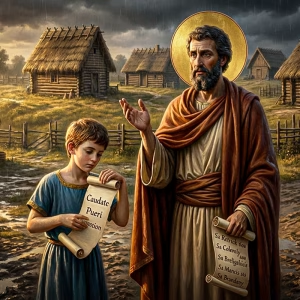
Born around 385–390 in Roman Britain (possibly modern Scotland, Wales, or England) to a Christian family, he was kidnapped at age 16 by Irish raiders and enslaved for six years, herding sheep. This hardship deepened his faith; he prayed fervently, and a vision urged him to escape. He fled, returned home, studied for the priesthood (possibly in Gaul under St. Germanus), and was ordained bishop.
Leadership Lessons for Catholic Leaders
Around 432, responding to a dream calling him back (“the voice of the Irish”), he returned as a missionary. Over decades, he preached, baptized thousands, established churches, monasteries, and schools, adapting to Celtic culture while confronting paganism. His surviving writings—the Confessio (spiritual autobiography) and Letter to Coroticus (condemning British abuses)—reveal his humility, courage, and rock-solid vocation despite feeling inadequate.
Legends abound: using the shamrock to explain the Trinity, driving snakes from Ireland (symbolic of paganism), raising the dead. He died March 17, 461 (or possibly later), at Saul, Downpatrick, where he built Ireland’s first church.
Reflection Questions & Personal Application
His feast day, March 17, honors his legacy as Ireland’s primary patron saint (with Sts. Brigid and Columba). Venerated in the Catholic, Orthodox, Anglican, and Lutheran traditions, Patrick exemplifies missionary zeal, conversion through perseverance, cultural engagement, and humble service—transforming a pagan land into a Christian stronghold that later evangelized Europe.