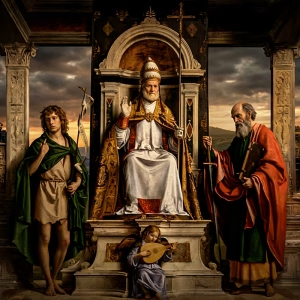


Saint Polycarp: Faithful Unto Death
Saint Polycarp (c. 69–155 AD), Bishop of Smyrna (modern Izmir, Turkey), stands as one of the most revered early Church Fathers and martyrs. A direct disciple of Saint John the Apostle (and possibly acquainted with others who knew Christ), Polycarp bridged the apostolic era to the second-century Church, preserving authentic teaching amid emerging heresies like Gnosticism.
Leadership Lessons for Catholic Leaders
As bishop, he was a steadfast defender of orthodoxy, friend of Saint Ignatius of Antioch, and mentor to Saint Irenaeus of Lyons. His sole surviving writing, the Epistle to the Philippians, urges faith, charity, and vigilance against false doctrine. Polycarp’s name (“much fruit” in Greek) reflects his fruitful ministry in building up the faithful.
He is best known for his heroic martyrdom around 155 AD, detailed in the Martyrdom of Polycarp—the earliest authentic account of a Christian martyr’s death. At 86, amid persecution, he refused to curse Christ or offer incense to Caesar. When urged to recant, he famously declared: “Eighty-six years have I served him, and he never did me any injury: how then can I blaspheme my King and my Savior?”
Condemned to burning, the flames miraculously encircled him without harm, leaving him unharmed until stabbed with a dagger. His blood extinguished the fire, and his body was later burned by pagans to prevent relic veneration.
Reflection Questions & Personal Application
He is patron of earaches and dysentery. Polycarp’s unwavering fidelity inspires believers: rooted in apostolic truth, he bore witness even unto death, embodying Christ’s call to faithfulness.