

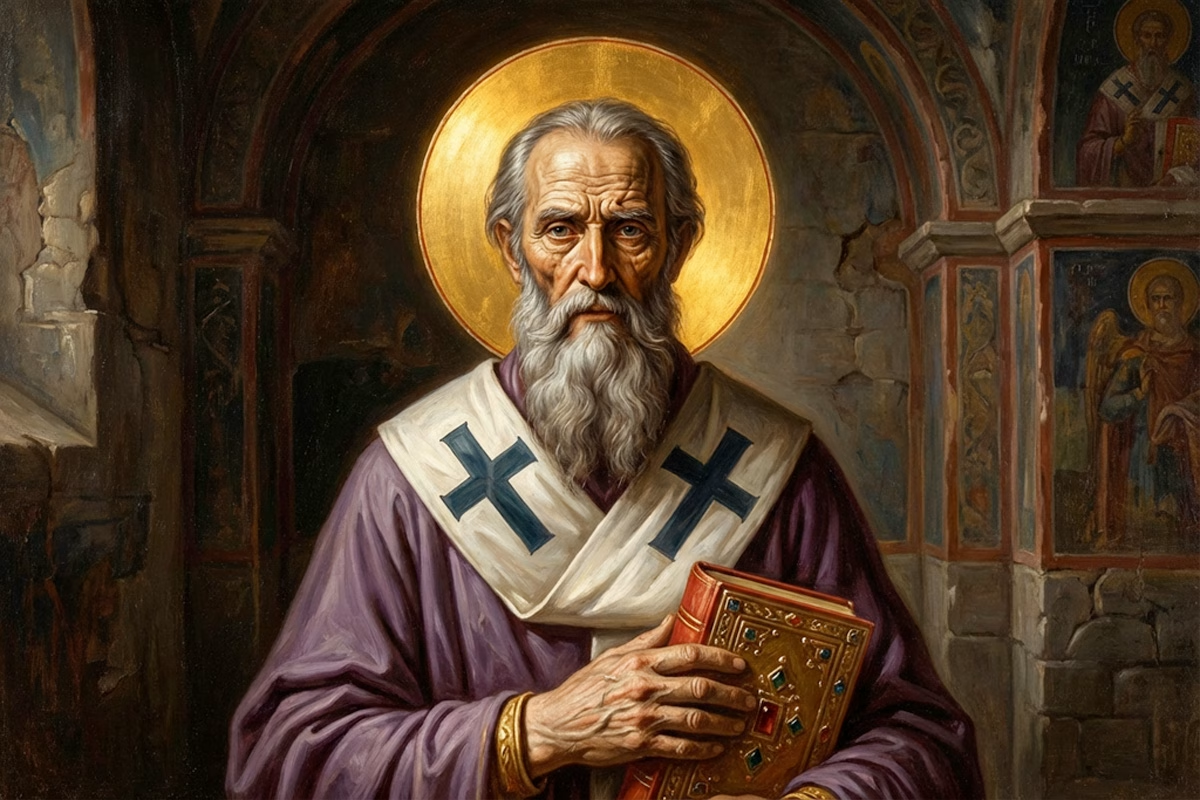
Saint Porphyry of Gaza: Faith in Hostile Ground
Saint Porphyry of Gaza (c. 347–420 AD), also known as Porphyrius, was a 4th–5th century bishop renowned for evangelizing the pagan stronghold of Gaza in Palestine.
Born in Thessalonica to a wealthy family, at age 25 he renounced his inheritance, distributing it to the poor, and embraced monastic life. He spent five years as a hermit in the Egyptian desert of Scete, then five more in austere solitude near the Jordan River, enduring hardships and illness while practicing prayer, penance, and charity. In Jerusalem, he was ordained a priest around 393 and entrusted with relics of the True Cross.
Leadership Lessons for Catholic Leaders
In 395, despite his reluctance and humility, he was consecrated Bishop of Gaza—a city dominated by paganism, where Christians faced harassment. With zeal and perseverance, Porphyry confronted idolatry head-on: he appealed to Emperor Arcadius for imperial support, obtained rescripts to close and destroy pagan temples (notably the grand temple of Marnas, chief deity of Gaza), and built a Christian church on its site as a triumphant symbol of conversion.
Through persistent missionary work, miracles (as recorded by his deacon and biographer Mark), and pastoral care, he largely eradicated pagan worship in his diocese by his death on February 26, 420. His biography, Vita S. Porphyrii by Mark the Deacon, remains a valuable historical source. His relics rest in the ancient Church of Saint Porphyrius in Gaza, one of the oldest Christian churches, founded on his efforts and still a center of worship.
Reflection Questions & Personal Application
Porphyry exemplifies bold evangelization in hostile environments, humble obedience to God’s call, and tireless commitment to building Christ’s Church amid opposition.