
Saint Eusebius of Vercelli: Faithful in Exile
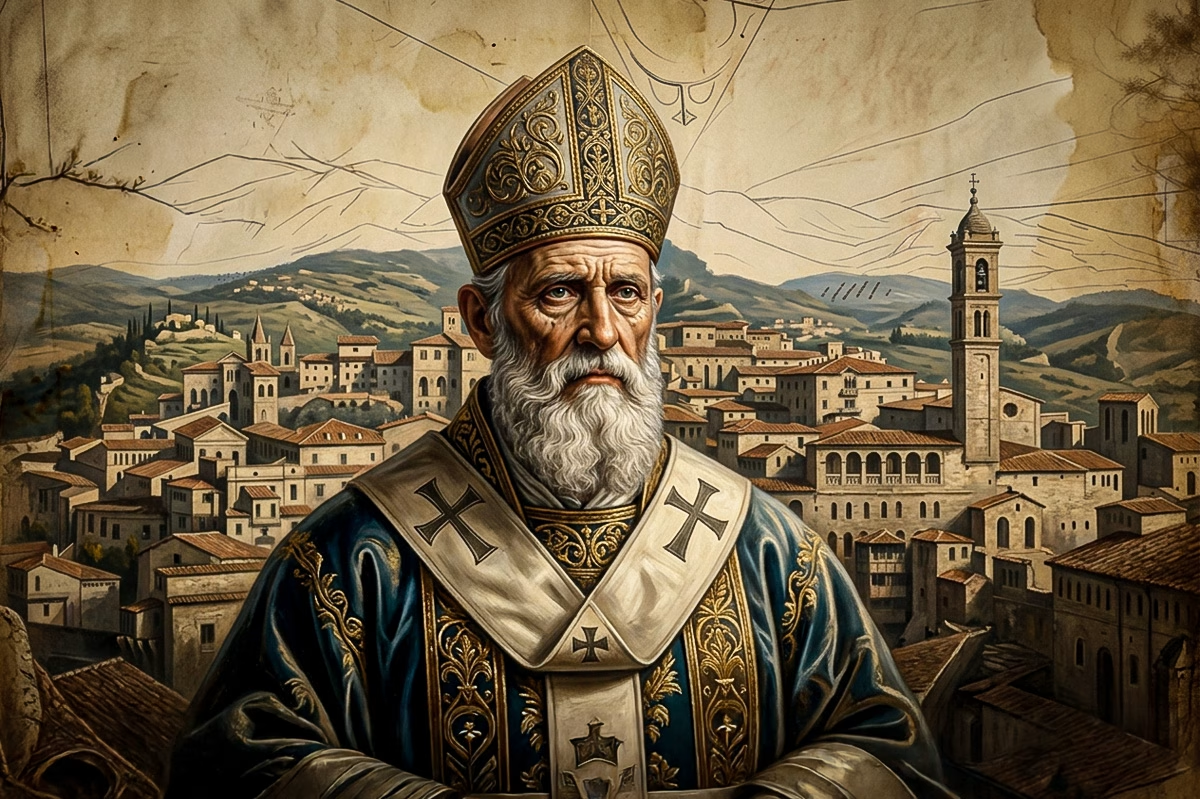
Saint Eusebius of Vercelli (c. 283 – 1 August 371) was a 4th-century bishop, confessor of the faith, and early defender of Catholic orthodoxy against Arianism.
Born around 283 on the island of Sardinia. After his father’s martyrdom, his mother took him to Rome, where he became a lector (and later a priest) in the Roman clergy.
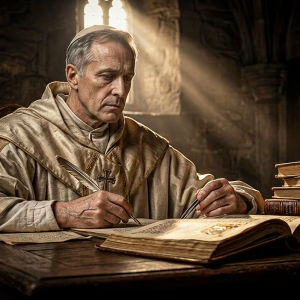
Leadership Lessons for Catholic Leaders
Bishop of Vercelli: Appointed the first recorded bishop of Vercelli (in Piedmont, northern Italy) around 340–345. He is noted for uniting the clerical and monastic life: he lived in community with his priests under a shared rule of prayer and discipline—one of the earliest Western examples of this practice.
Defense of the Faith: A strong ally of St. Athanasius, he firmly upheld the divinity of Christ (the Nicene faith) against Arian heresy. At the Council of Milan (355), he refused to condemn Athanasius and was consequently exiled by the Arian-leaning Emperor Constantius II. He suffered harsh treatment in exile (in Palestine, Cappadocia, and Egypt) before being allowed to return after the emperor’s death.
Later Years: Upon returning to Vercelli, he worked to restore orthodoxy in northern Italy and supported the efforts of St. Hilary of Poitiers. He died peacefully in Vercelli on 1 August 371 (some sources say 370).
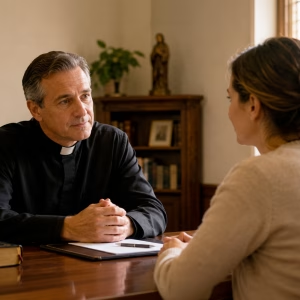
Reflection Questions & Personal Application
He is venerated as a saint in the Catholic Church, Eastern Orthodox Church, and Anglican Communion. His feast day is 2 August (optional memorial in the General Roman Calendar). He is the patron saint of Vercelli (and traditionally of Piedmont).
Eusebius is remembered as a courageous pastor who combined firm doctrinal fidelity with a model of communal priestly life and pastoral care amid persecution.