
Saint Paul VI: Courage in a Time of Change
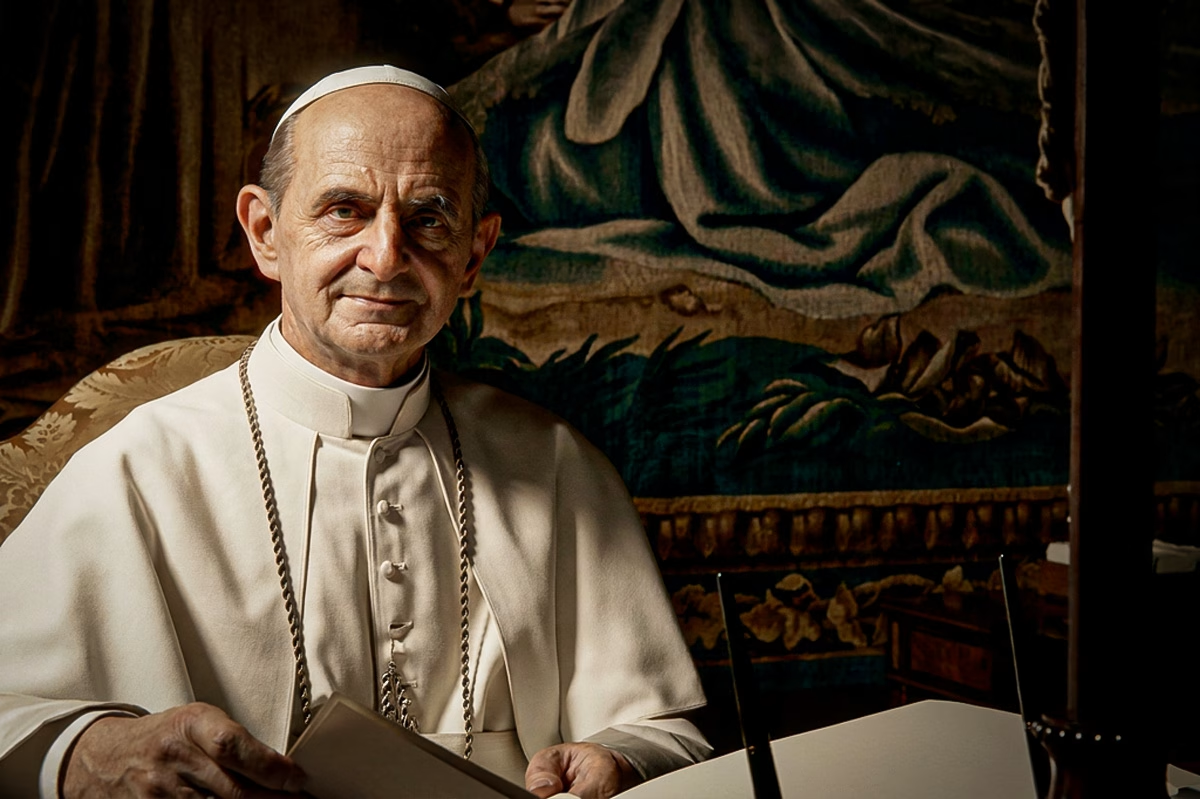
Catholic leaders can draw profound lessons from Saint Paul VI (1897–1978), the pope who guided the Church through turbulent post-Vatican II years.
Born Giovanni Battista Montini, he served as Archbishop of Milan before being elected pope in 1963. He oversaw the final sessions of the Second Vatican Council, implemented its reforms, and promulgated the new Missal. In 1968 he courageously issued Humanae Vitae, reaffirming the Church’s teaching on marriage, sexuality, and the sanctity of life despite fierce opposition. He was the first modern “pilgrim pope,” traveling to the Holy Land, India, the United Nations, and Latin America. A man of deep prayer and interior suffering, he died in 1978 and was canonized in 2018.
Leadership Lessons for Catholic Leaders
Fidelity amid contradiction: Paul VI upheld doctrine while implementing renewal. He showed that true reform never means rupture with Tradition. Leaders must resist pressure to dilute the Faith.
Courageous teaching: Facing widespread dissent after Humanae Vitae, he did not yield. His example calls leaders to proclaim unpopular truths with charity and clarity.
Dialogue with the modern world: He engaged culture, politics, and other religions without compromising identity, modeling prudent openness rooted in Christ.
Suffering service: He bore the “agony of the papacy” with patience, teaching that leadership often means carrying the Cross for the flock.
Reflection Questions & Personal Application
In an age of confusion and polarization, Saint Paul VI teaches Catholic leaders to be both faithful guardians and courageous reformers—holding fast to truth while extending Christ’s mercy to a wounded world. “The Church is not a museum of the past,” he said, “but a living force for the present.”