
As pastor of your parish, you stand in persona Christi as the spiritual shepherd of your flock. Canon 519 of the Code of Canon Law entrusts you with the pastoral care of the community under the authority of the diocesan bishop. You are to carry out the offices of teaching, sanctifying, and governing (regendi) with the cooperation of priests, deacons, and lay faithful. This “governing” office necessarily includes administrative responsibilities: defining roles through job descriptions, setting clear goals, stewarding resources, and evaluating performance. The tension you feel is real and ancient, being both spiritual father and practical leader, shepherd of souls and steward of the parish’s mission and people. Yet Christ Himself models how to hold these together with charity, truth, and fruitfulness.
The Inherent Tension
You celebrate the sacraments, preach the Word, visit the sick, console the grieving, and guide souls toward heaven. At the same time, you hire and supervise staff, approve budgets, ensure programs serve the parish mission, and address underperformance that affects the common good. Praise flows easily when a youth minister’s program draws families back to faith, a music director elevates the liturgy, or a business manager keeps the books in excellent order. Corrective feedback feels heavier when initiatives falter, attitudes sour, or duties go unmet, especially when the person involved is a dedicated volunteer or longtime employee whose heart is in the right place.
In my years serving as a deacon and working as a church leadership consultant with pastors across many parishes, I have seen this tension surface again and again. It is not a flaw in your vocation but an invitation to imitate the Good Shepherd more fully. Jesus did not separate spiritual leadership from practical accountability; He integrated them.
Jesus did not separate spiritual leadership from practical accountability; He integrated them.
Jesus as Model of Feedback and Formation
Our Lord frequently gave both affirming and corrective feedback to His closest collaborators, the apostles.
- Affirmation and encouragement: To Peter’s confession, “You are the Messiah, the Son of the living God,” Jesus replied, “Blessed are you, Simon son of Jonah. For flesh and blood has not revealed this to you, but my heavenly Father” (Mt 16:17 NABRE). He built up identity and mission with truth spoken in love. He noticed and named good fruit in others as well.
- Corrective feedback with charity and clarity: When Peter rebuked Jesus about His coming Passion, the Lord responded immediately: “Get behind me, Satan! You are an obstacle to me. You are thinking not as God does, but as human beings do” (Mt 16:23 NABRE). This was blunt but aimed at realignment, not destruction. On the boat in the storm, He said to the disciples, “Why are you terrified, O you of little faith?” (Mt 8:26 NABRE) while still calming the winds and the sea. To Martha, anxious and distracted, He gently said, “Martha, Martha, you are anxious and worried about many things. There is need of only one thing. Mary has chosen the better part” (Lk 10:41-42 NABRE). Even in the upper room, He washed their feet, foretold betrayal and denial, yet promised restoration and the Holy Spirit.
Jesus’ feedback was never vague or merely emotional. It was rooted in the mission of the Kingdom, directed toward conversion and greater fruitfulness, and always accompanied by grace, formation, and hope. He set clear expectations (“Follow me”), modeled the standard, observed performance in real time, and addressed deviations promptly for the sake of the sheep and the disciples themselves.
Canon Law and the Duty of Governance
Canon Law affirms your role as administrator of the parish’s temporal goods (c. 532) and your responsibility to govern wisely with the assistance of others. You represent the parish in juridic affairs and must ensure goods and personnel are administered according to the norms of stewardship. This includes prudent management of staff. While the Code emphasizes collaboration and the dignity of the lay faithful, it does not remove your canonical duty to direct the parish’s life toward its supernatural end. Good administration serves evangelization and the salvation of souls; neglect harms it.
Mercy and justice are not opposed; true charity sometimes requires difficult decisions for the good of the parish.
Practical Wisdom for Pastoral Leadership
- 1. Clarity Up Front: Develop clear job descriptions rooted in the parish’s mission and the person’s gifts. Tie them to measurable goals that advance evangelization, catechesis, liturgy, and charity. Review them annually in a spirit of discernment.
- Regular, Balanced Feedback: Make praise specific and public when appropriate. For correction, follow the pattern of Matthew 18:15, first privately, with charity and facts, seeking understanding. Frame it as “How can we better serve the mission together?” Document significant issues for accountability and protection of all parties.
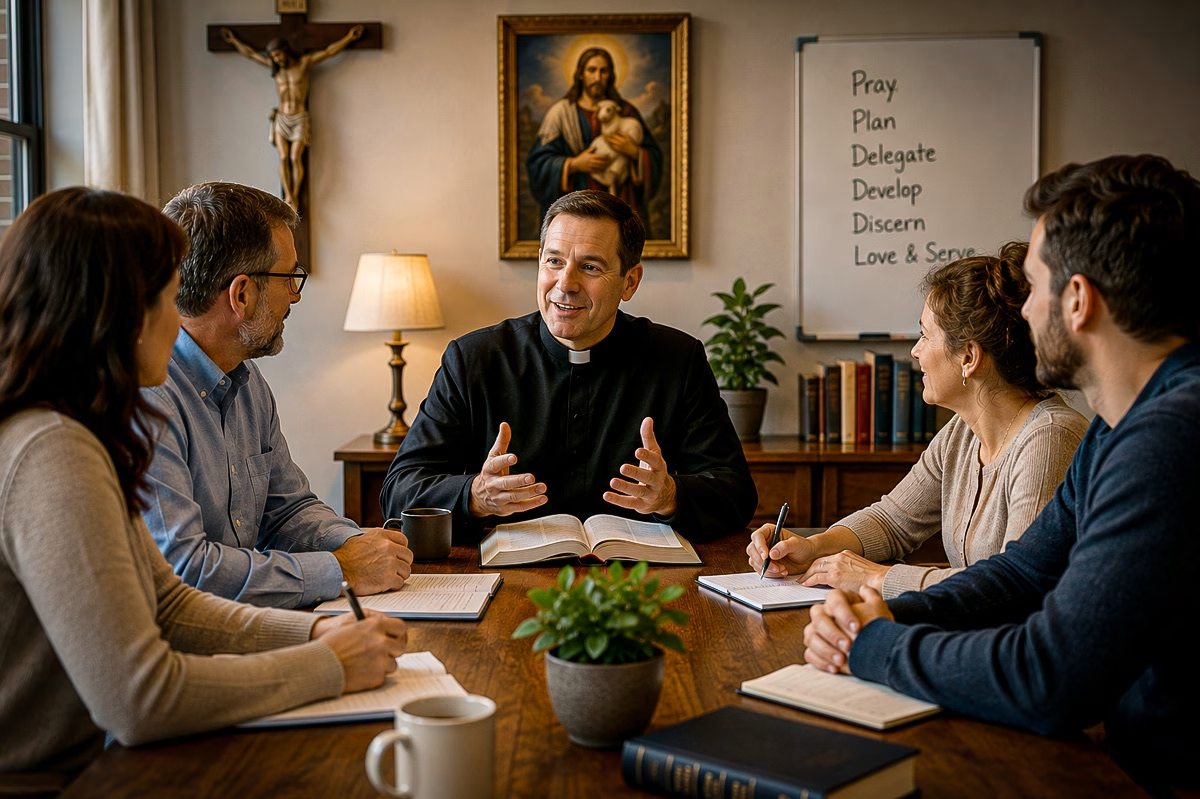
- Formation and Accompaniment: Like Jesus with the apostles, invest in formation. Regular staff meetings for prayer, planning, and professional growth turn management into discipleship. When performance lags, explore obstacles (formation gaps, personal struggles, unclear expectations) before decisive action.
- Prayerful Discernment: Bring personnel matters to the Eucharist and Adoration. Seek counsel from your bishop, vicar for clergy, or wise mentors. Remember that mercy and justice are not opposed; true charity sometimes requires difficult decisions for the good of the parish.
- Self-Care in Leadership: You cannot give what you do not live. Model accountability by seeking your own formation in leadership and administration. Many dioceses now offer excellent programs precisely for this integration.
A Shepherd After Christ’s Heart
Father, the staff and parishioners do not need a CEO in clerical garb; they need a pastor who leads with the mind of Christ, humble, decisive, truthful, and loving. When you define roles, set goals, measure outcomes, and give feedback, you are exercising the munus regendi for the glory of God and the building up of His Church. The same Lord who equipped the apostles despite their weaknesses will equip you.
In my consulting work, I have witnessed the profound fruit that emerges when priests embrace this integrated leadership with courage and prayer. May the Virgin Mary, Queen of the Apostles and Mother of the Church, intercede for you. May you find joy in the tension, knowing that faithful stewardship of both souls and structures bears eternal fruit.
Deacon Patrick Stokely
Saints Peter and Paul Parish
West Chester, PA