

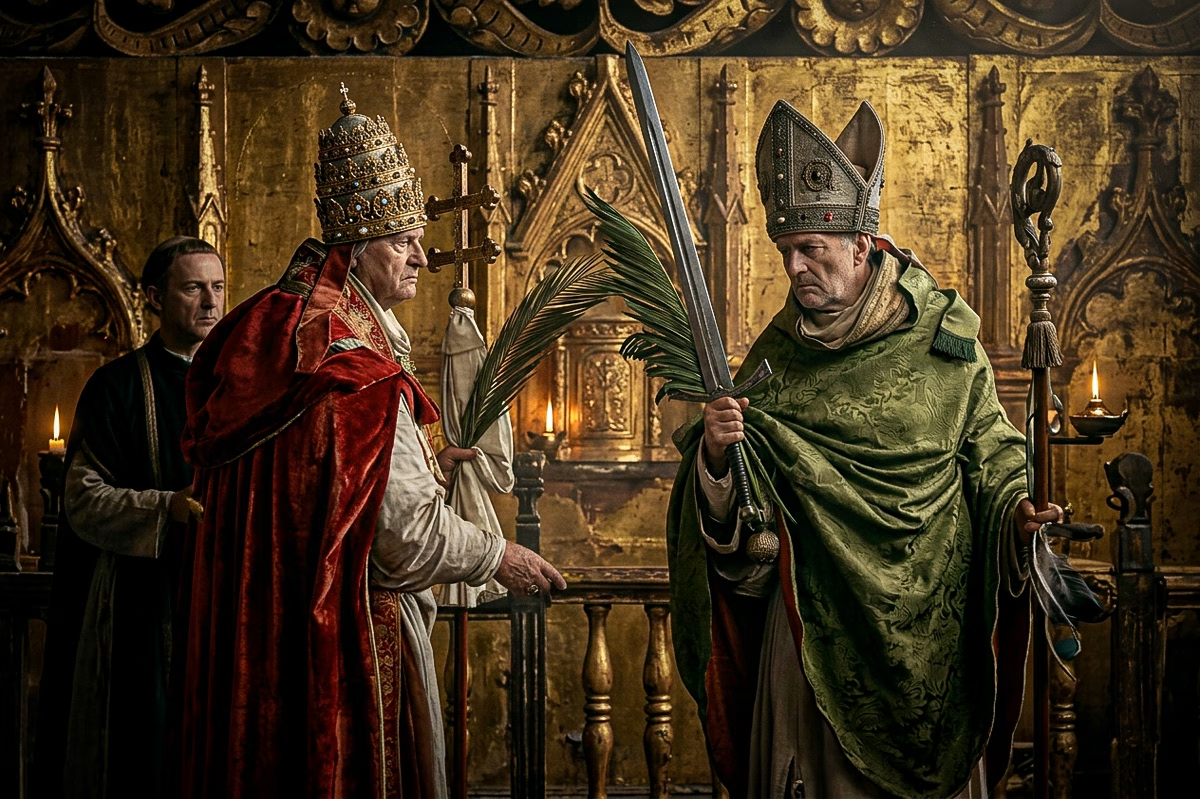
Cornelius and Cyprian: Catholic Leadership in Mercy
Saints Cornelius and Cyprian are commemorated together on September 16, as close allies who both faced martyrdom amid the persecution and controversies of the mid-3rd century Church.
Leadership Lessons for Catholic Leaders
St. Cornelius (Pope, r. 251–253):
- Elected Bishop of Rome in 251, during the aftermath of the Decian persecution, which had caused many Christians to lapse (renounce their faith) under threat of death.
- His papacy was immediately contested by Novatian, a rigorist who set himself up as a rival “antipope,” arguing that the lapsed could never be readmitted to communion, even after penance.
- Cornelius took the more merciful position — that lapsed Christians could be reconciled through genuine penance — a stance strongly supported by Cyprian.
- Exiled by Emperor Trebonianus Gallus in 253 during renewed persecution, he died in exile that same year, honored as a martyr.
St. Cyprian (Bishop of Carthage, c. 210–258):
- A former rhetorician who converted to Christianity and quickly rose to become Bishop of Carthage in North Africa around 249.
- One of the most important early Latin Church Fathers; his writings shaped Catholic ecclesiology, especially on the unity of the Church and the role of bishops.
- His treatise De Unitate Ecclesiae (“On the Unity of the Church”) argued forcefully for Church unity centered on the bishops in communion with one another — directly relevant to the Novatianist schism.
- Corresponded closely with Cornelius, backing him against Novatian and addressing the same crisis over the lapsed.
- Also had to navigate the Decian persecution himself, temporarily going into hiding to shepherd his flock from a distance — controversial at the time, but he defended it as prudent rather than cowardly.
- Was martyred by beheading in 258 under Emperor Valerian, becoming one of the great martyr-bishops of the early Church.
Reflection Questions & Personal Application
Why they’re linked liturgically: Their shared feast reflects their historical partnership defending Church unity and mercy toward the lapsed during a turbulent era, and their common witness as bishop-martyrs of the mid-3rd century.