
Saint John Chrysostom: Catholic Preaching with Courage
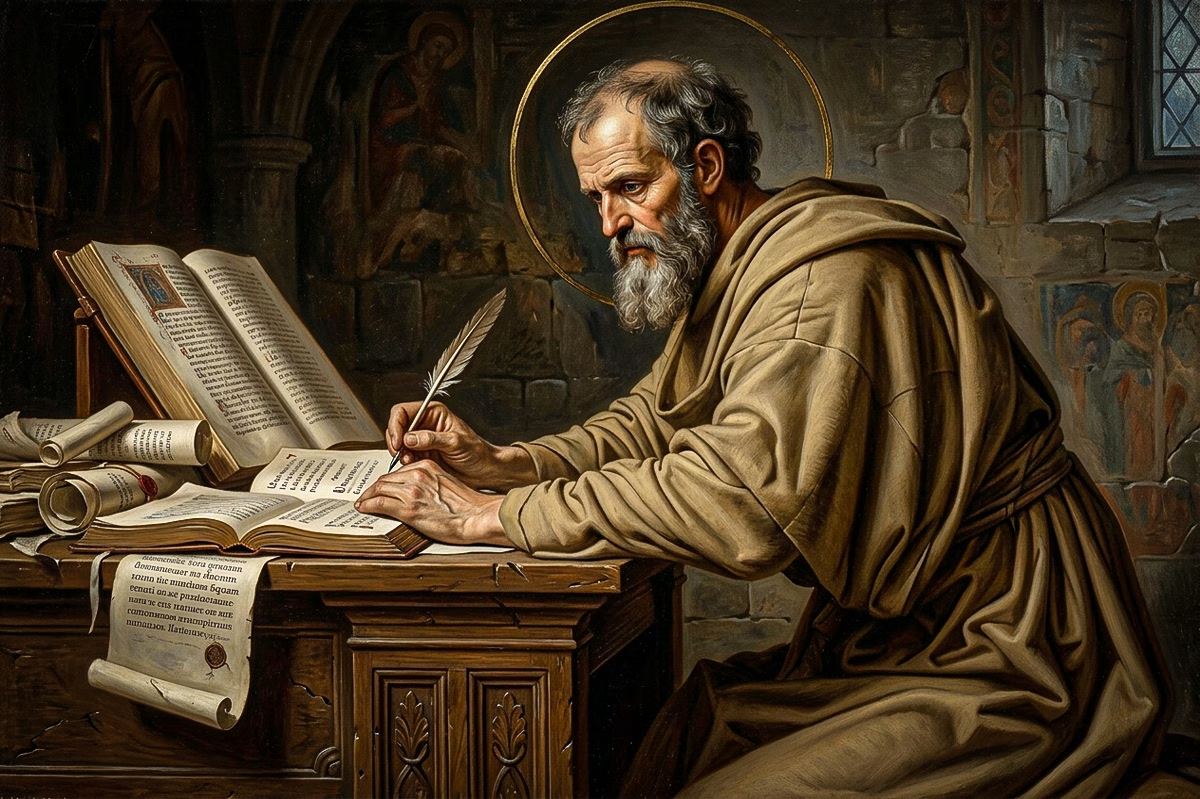
St. John Chrysostom (c. 347–407) was Archbishop of Constantinople and one of the most influential preachers and theologians in Church history — his name “Chrysostom” (Greek for “golden-mouthed”) reflects his legendary eloquence.
Leadership Lessons for Catholic Leaders
Life:
- Born in Antioch, Syria, around 347 AD, to a Christian mother, Anthusa, after his father died young.
- Studied rhetoric under the famous pagan orator Libanius, then turned toward ascetic life, spending several years as a hermit in the mountains near Antioch — a period that damaged his health permanently.
- Ordained a priest in Antioch in 386, where he preached extensively for about 12 years.
- Made Archbishop of Constantinople in 398, largely against his will (he was essentially kidnapped and brought there for consecration due to his fame).
Ministry and Teaching:
- Renowned for his direct, practical preaching — verse-by-verse biblical homilies that applied Scripture to everyday moral life, wealth, poverty, and social justice.
- Sharply criticized the excesses of the wealthy and the imperial court, insisting that care for the poor was central to Christian life, not optional.
- Reformed clergy discipline and Church finances in Constantinople, redirecting funds toward hospitals and charity.
- His liturgical legacy lives on in the Divine Liturgy of St. John Chrysostom, still the most commonly used liturgy in the Eastern Orthodox Church.
Conflict and Exile:
- His outspokenness made him powerful enemies, especially Empress Eudoxia and Theophilus of Alexandria.
- He was deposed and exiled multiple times, dying in 407 during a forced march into further exile, reportedly with his final words being “Glory be to God for all things.”
Legacy:
- Declared a Doctor of the Church.
- Feast day: September 13 (Catholic); Eastern Orthodoxy commemorates him on multiple dates.
- One of the Three Holy Hierarchs, alongside St. Basil the Great and St. Gregory Nazianzen.
- Left an enormous body of writings — homilies, treatises, and letters — that remain foundational for biblical preaching and Christian ethics today.