
Saint Isidore: Holiness in Work
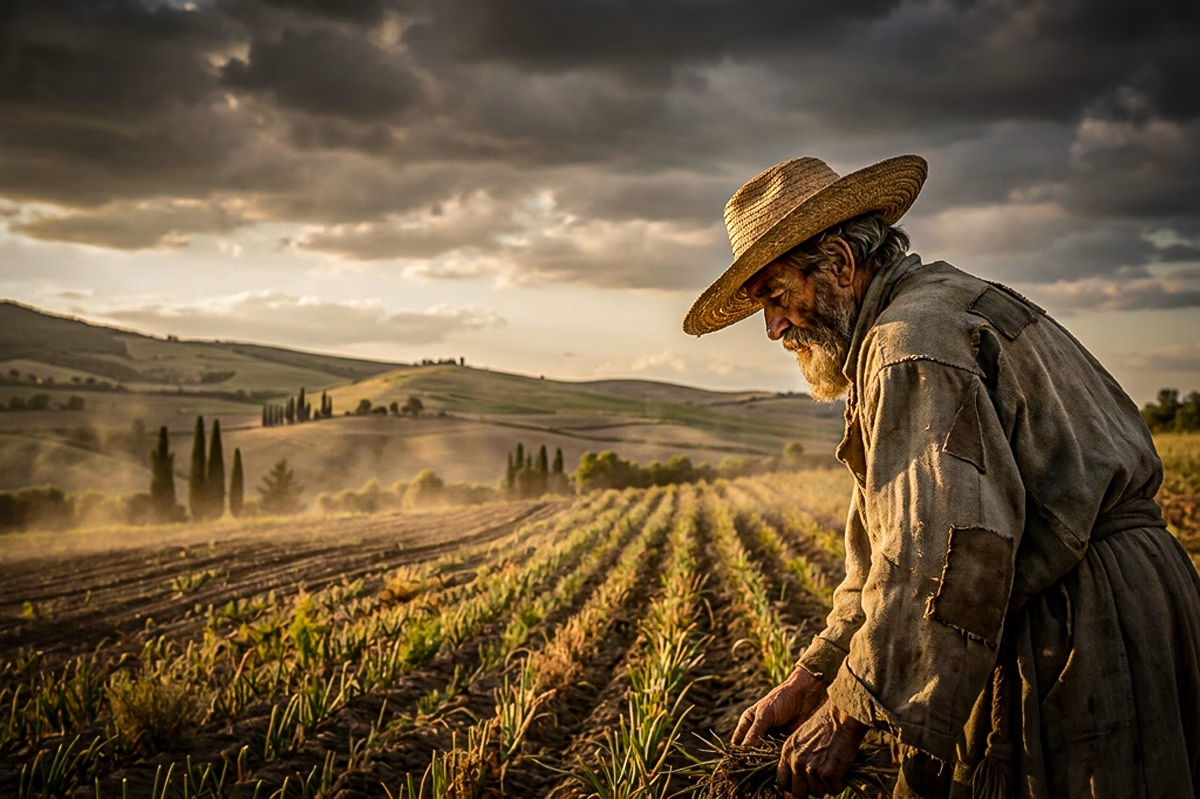
St. Isidore the Farmer (c. 1070–1130), also known as St. Isidore the Laborer, is the patron saint of farmers, rural communities, and workers. His feast day is May 15. A simple peasant who worked the fields outside Madrid, Spain, for the same landowner his entire life, Isidore is remembered for his deep holiness lived amid ordinary manual labor.
Leadership Lessons for Catholic Leaders
Practical leadership lessons: Isidore models integrity and diligence in daily work. Despite attending daily Mass first (sometimes arriving late to the fields), his work never suffered — legend says angels plowed for him. He rose to manage the entire estate through faithful service rather than ambition. He taught the dignity of honest labor done well and with joy. Leaders learn from him to put God first without neglecting duty, to lead by humble example, and to create order and fruitfulness through steady, patient effort. His generosity — sharing his limited food with the poor — shows that true influence flows from charity, not power.
Spiritual learnings: St. Isidore teaches the sanctification of ordinary work. He turned plowing, sowing, and harvesting into prayer, offering his labor to God. Together with his wife St. Maria de la Cabeza (also a saint), he lived a life of simplicity, chastity after the death of their infant son, and radical care for the needy. He reminds us that holiness is not reserved for monks or clergy but is available to everyone in their daily vocation. Prayer, trust in providence, and detachment from material excess allow God’s grace to multiply our efforts.
Reflection Questions & Personal Application
From St. Isidore we learn that faithful, prayerful work — done with humility and generosity — becomes a powerful path to sanctity. In an age that often separates faith from labor, he calls us to offer our daily tasks to God and trust that angels will help when we put Him first.