

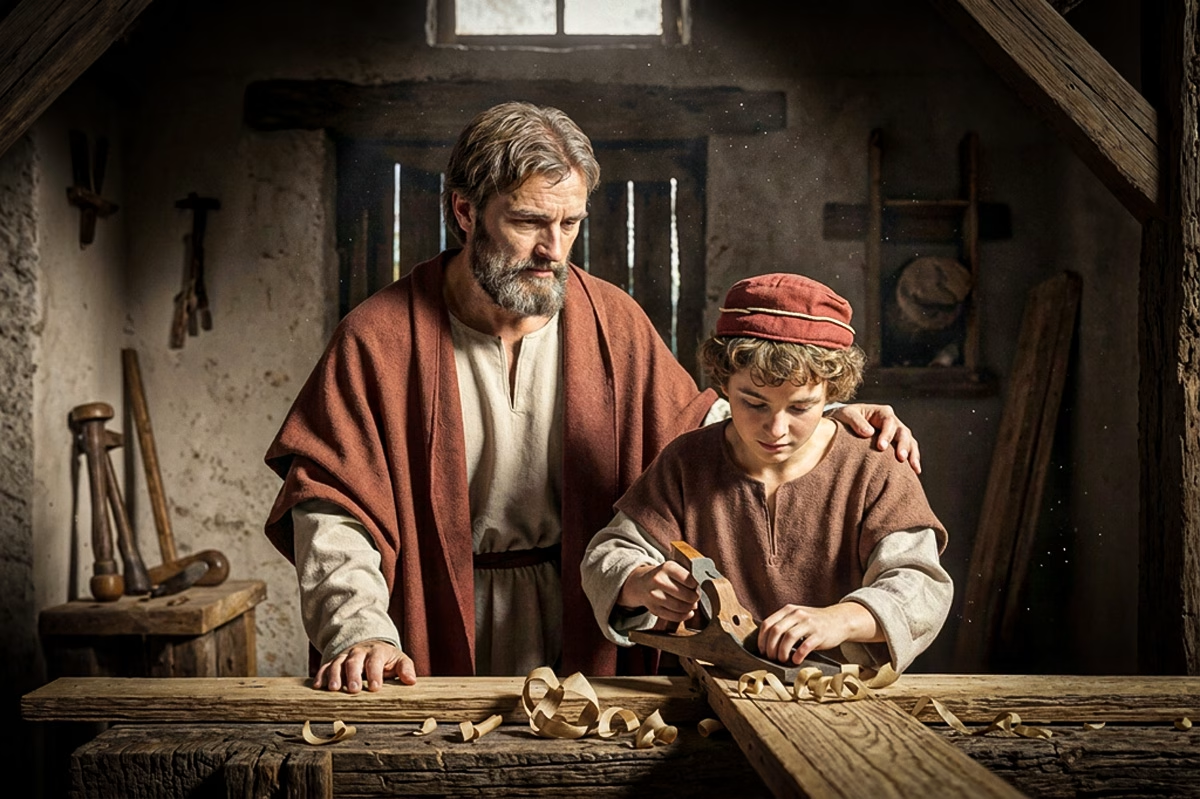
Saint Joseph the Worker: Holiness in Labor
St. Joseph the Worker offers profound practical and spiritual lessons through his hidden life as a carpenter, husband, and foster father of Jesus. Pope Pius XII instituted his feast on May 1, 1955, to affirm the dignity of labor against secular ideologies and to present Joseph as the model worker who united daily toil with holiness.
Leadership Lessons for Catholic Leaders
Practical leadership lessons: Joseph led his family through quiet action rather than words. He provided for Mary and Jesus through honest manual labor, teaching the trade to Jesus and modeling responsibility, diligence, and prudence. He made decisive, obedient choices—fleeing to Egypt, returning to Nazareth—protecting his household amid danger without seeking recognition. His life shows that true leadership flows from fidelity to duty, humility in ordinary tasks, and putting family and mission above self. Work becomes service when done with order, patience, and detachment from comfort or acclaim.
Spiritual learnings: Joseph exemplifies sanctification of daily work. As a “just man,” he lived in constant union with God’s will through silent prayer, trust in providence, and loving obedience. He turned labor into prayer and penance, offering fatigue and trials for love of God and family. His humility, chastity, and hiddenness teach that greatness lies in small things done with great love. He reminds us that work participates in God’s creative and redemptive work when offered with purity of intention.
Reflection Questions & Personal Application
In an age of distraction and burnout, St. Joseph the Worker calls leaders and workers alike to disciplined hands, a trusting heart, and a recollected spirit. Holiness is not separate from labor—it is forged in it.