
Korean Martyrs: Catholic Lay Leadership That Endured
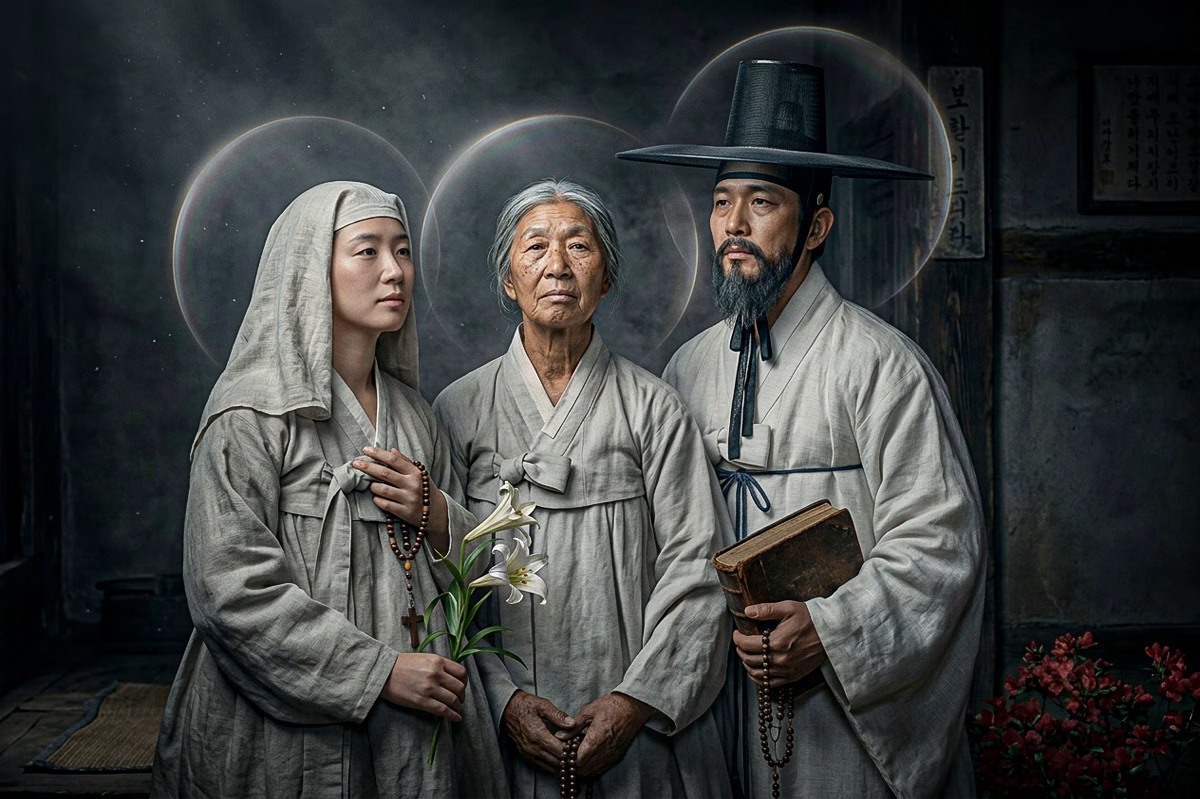
Saints Andrew Kim Taegon, Paul Chong Hasang, and Companions are the great martyrs of Korea, commemorated together on September 20.
Leadership Lessons for Catholic Leaders
Historical Context:
- Catholicism arrived in Korea in a remarkable way: unlike most missions, the faith was first brought in by Korean laypeople themselves in the late 18th century, after Korean scholars encountered Catholic texts brought back from Beijing. A formal Christian community existed in Korea before any priest ever set foot there.
- The Korean Joseon dynasty viewed Christianity with deep suspicion — it clashed with Confucian social order (particularly ancestor veneration rites) and was seen as a foreign, subversive influence.
- Between 1791 and 1888, waves of brutal persecution killed an estimated 8,000–10,000 Korean Catholics, among both clergy and laity.
St. Andrew Kim Taegon (1821–1846):
- Korea’s first native-born priest.
- Born to a Catholic family; his father, Ignatius Kim, was later martyred and canonized as well.
- Traveled to Macau for seminary training, then returned to Korea via a dangerous overland and sea route to minister secretly to the underground Church.
- Arrested while helping arrange the entry of foreign missionaries into Korea, and beheaded in 1846 at age 25 near Seoul.
- His final message to the faithful urged perseverance in the faith despite persecution.
St. Paul Chong Hasang (1795–1839):
- A lay apostle and catechist, not ordained, but instrumental in sustaining and organizing the Korean Catholic community.
- Petitioned Rome repeatedly for missionary priests to be sent to Korea, helping re-establish contact between the isolated Korean Church and the wider Catholic world.
- Martyred in 1839 during the Gihae persecution.
Companions:
- The canonized group includes 103 martyrs total — priests, religious, and laypeople, including many women and even children, killed between 1839 and 1867.
- They represent the extraordinary character of Korean Catholicism: a Church largely built, sustained, and defended by the laity itself, often without any resident clergy for decades.
Legacy:
- Canonized together in 1984 by Pope John Paul II in Seoul — the first canonization ceremony held outside Rome.
- Patrons of Korea; their witness is central to Korean Catholic identity, epitomizing a faith that took root and endured almost entirely through lay initiative.