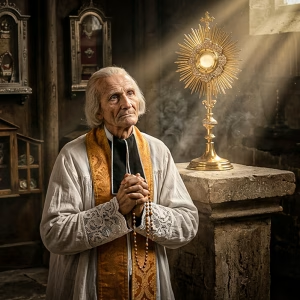


Saint Cajetan: Reform Through Providence
Saint Cajetan (Gaetano dei Conti di Thiene, October 1480 – 7 August 1547) was an Italian priest, reformer, and co-founder of the Theatines (Congregation of Clerics Regular). He is a key figure of the Catholic Counter-Reformation.
Born into a noble family in Vicenza (Republic of Venice, modern Italy). He studied civil and canon law at the University of Padua, earning doctorates, and later served as a prothonotary in the Roman Curia under Pope Julius II.
Leadership Lessons for Catholic Leaders
Priesthood and Charity: Ordained a priest in 1516. He joined the Oratory of Divine Love in Rome, a group focused on prayer and works of mercy. He founded hospitals for incurables in Venice and elsewhere, and worked among the poor and sick, often living simply despite his background.
Founding the Theatines: In 1524, together with Gian Pietro Carafa (later Pope Paul IV) and others, he founded the Theatines in Rome. The order aimed to reform the clergy through strict poverty, communal life, prayer, and pastoral work—without seeking fixed incomes or endowments, relying instead on divine providence. After the Sack of Rome (1527), the community moved to Venice and later to Naples, where Cajetan established an important center of reform.
Death and Canonization: He died in Naples on 7 August 1547. Beatified in 1629 by Pope Urban VIII and canonized in 1671 by Pope Clement X.
Reflection Questions & Personal Application
His feast day is 7 August. He is the patron saint of the unemployed, job seekers, gamblers, workers, and Argentina (among other places). He is often invoked for those seeking work or financial help.
Cajetan is remembered for combining deep personal holiness and trust in God’s providence with practical efforts to renew the Church and serve the needy in a time of crisis.