
Saint Gregory the Great: The Servant Who Leads
St. Gregory the Great (pope 590–604) offers a model of leadership that remains strikingly relevant for pastors and bishops today.
Leadership Lessons for Catholic Leaders
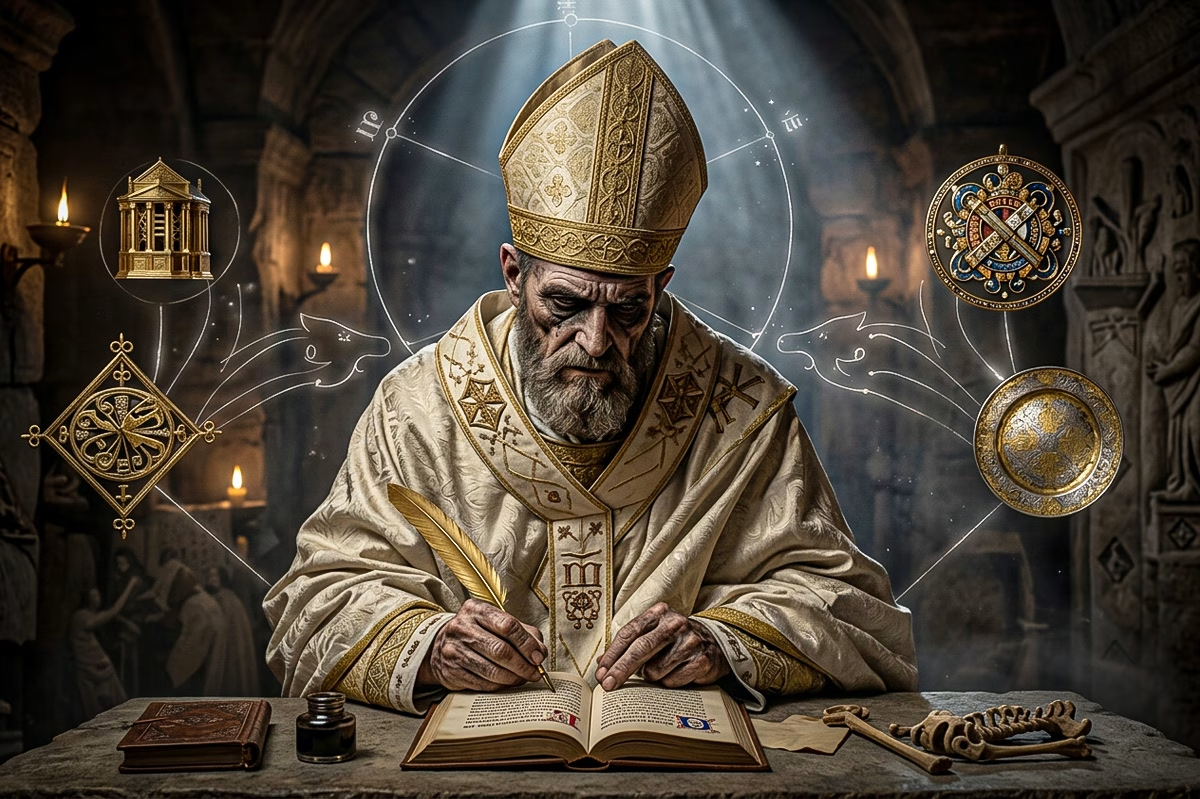
Servant leadership over power. Gregory called himself “servus servorum Dei” — servant of the servants of God. He insisted that authority exists for the sake of souls, not status. Leaders who see their role as service rather than dominion earn trust rather than merely command it.
Pastoral care grounded in theology. His Liber Regulae Pastoralis (Pastoral Rule) taught that a leader must be both contemplative and active — deeply rooted in prayer and Scripture, yet attentive to the concrete needs of the people entrusted to him. Leadership divorced from spiritual depth becomes mere administration.
Adapting teaching to the person. Gregory famously taught that preaching and correction must be tailored to the hearer — the same word does not heal every soul. This calls diocesan and parish leaders to know their people individually rather than applying one-size-fits-all formulas.
Administrative competence in service of mission. Gregory reformed Church finances, cared for the poor, and negotiated with civil powers — practical, unglamorous work done so that ministry could flourish. Good leadership often looks like faithful stewardship of ordinary responsibilities.
Humility amid greatness. Despite reshaping the papacy’s reach and reforming liturgy, Gregory resisted grandiosity, wary of pride even in doing good.
Reflection Questions & Personal Application
For today’s leaders: pair contemplation with action, tailor pastoral care to real people, treat administration as ministry, and let humility temper authority.