
Saint Helena: Faith in Places of Power
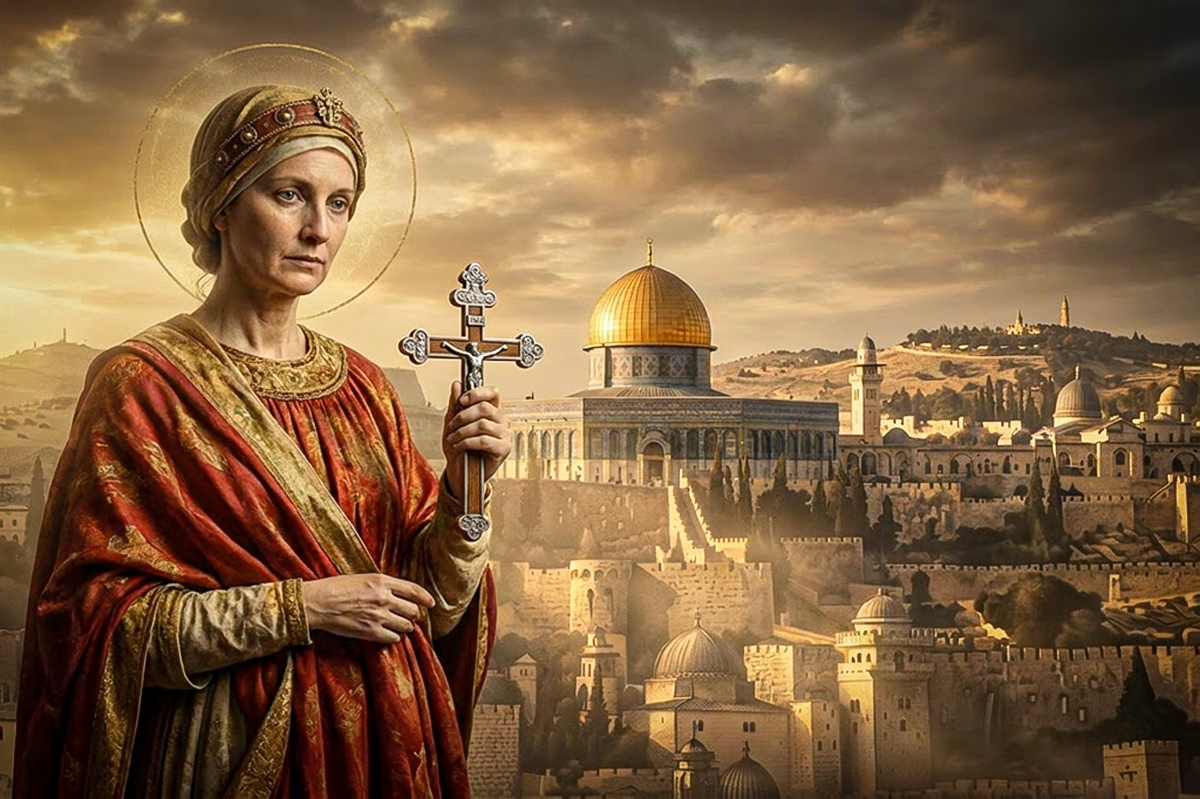
Catholic leaders can draw profound lessons from Saint Helena (c. 248–330), Empress and mother of Constantine the Great, honored as “Equal to the Apostles.”
Born of humble origins in Asia Minor (possibly a stable-maid), she married Constantius Chlorus, bore Constantine, and was later divorced for political reasons. When her son became emperor, he elevated her to Augusta. After converting to Christianity, Helena used her imperial power for good: generous almsgiving, freeing prisoners, and—most famously—her pilgrimage to the Holy Land around 326. There she discovered the True Cross, built churches at the sites of the Nativity, Holy Sepulchre, and Ascension, and promoted the faith across the empire.
Leadership Lessons for Catholic Leaders
Influence through humility and faith: From low station to empress, Helena showed that God exalts the lowly. Leaders learn that personal holiness and conversion matter more than pedigree or position.
Bold witness in power: She leveraged authority to advance the Gospel—funding churches, supporting the poor, and making the faith visible. Catholic leaders are called to use influence for Christ without compromise.
Zeal for truth and sacred sites: Her search for the True Cross models deep devotion and evangelization. In a skeptical age, leaders must recover and proclaim the concrete realities of our faith.
Maternal and patient perseverance: Despite personal suffering (divorce, family tragedies), she remained faithful and guided her son toward Christianity, helping end persecutions.
Reflection Questions & Personal Application
Saint Helena teaches that authentic leadership flows from radical faith, humble service, and courageous action for the Kingdom. Even in high places, the greatest impact comes from centering everything on Christ and His Cross.