

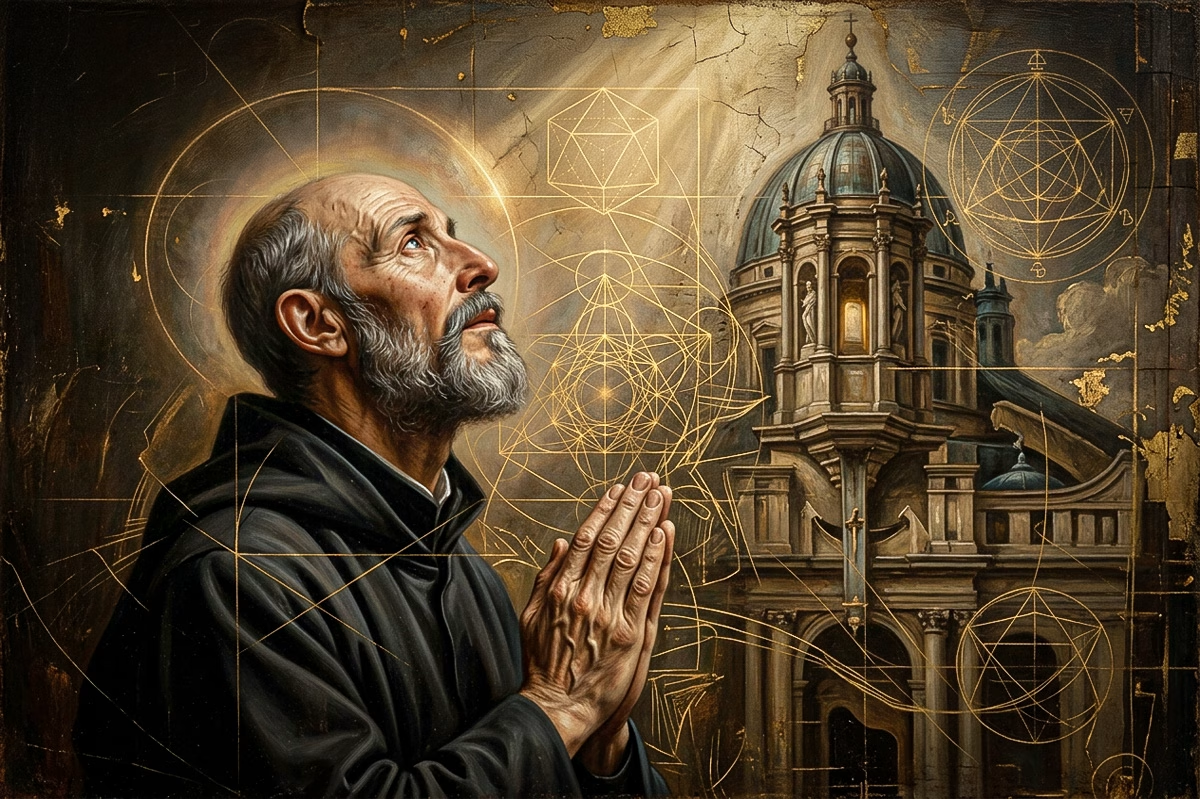
Saint Vincent de Paul: Charity Organized for Impact
St. Vincent de Paul (1581–1660) was a French priest renowned as one of the great apostles of charity in Church history, commemorated on September 27.
Leadership Lessons for Catholic Leaders
Life:
- Born in 1581 to a peasant family in Pouy, in the Gascony region of France.
- Ordained a priest in 1600 at just 19 (an unusually young age, obtained through a dispensation).
- According to his own later account, he was captured by pirates and enslaved in Tunis for about two years before escaping — though some historians debate the details of this episode.
- His early priesthood was fairly conventional and even somewhat ambitious, seeking benefices and patronage; a profound conversion of heart gradually redirected him toward the poor.
Turning Point:
- Around 1617, while serving as a chaplain, he was moved by the confession of a dying peasant and realized how spiritually neglected rural populations were — this became the seed of his life’s mission.
- That same year, in Châtillon-les-Dombes, he organized laypeople to systematically care for a poor sick family, which grew into the Confraternities of Charity, early lay organizations for organized charitable relief — a model that spread widely.
Major Foundations:
- Congregation of the Mission (Vincentians/Lazarists), founded in 1625, dedicated to evangelizing rural poor and training clergy.
- Daughters of Charity, co-founded with St. Louise de Marillac in 1633 — revolutionary for their time as women religious who worked actively “in the world” (hospitals, streets, homes) rather than living in cloistered convents.
- Organized relief efforts for galley slaves, foundlings (abandoned children), war refugees, and victims of famine.
- Worked to reform clergy formation, pushing for better priestly education and spiritual preparation.
Character and Approach:
- Emphasized practical, hands-on charity paired with genuine respect for the dignity of the poor — famously insisting that those served be treated with the same reverence given to Christ himself.
- Known for organizational skill, marshaling significant resources and volunteers (including wealthy laywomen) for sustained charitable work, not just occasional almsgiving.
Legacy:
- Died in Paris in 1660.
- Canonized in 1737 by Pope Clement XII.
- Declared patron saint of all charitable works and societies by Pope Leo XIII in 1885.
- The Society of Saint Vincent de Paul, a lay charitable organization founded in 1832 (long after his death) and still active worldwide today, is named in his honor.